
SILSITRA
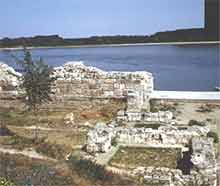 Silistra is Danube river port. It occurred as Roman fortress and a settlement during the reign of the Emperor Trayan. A Roman tomb of the 4th century has been discovered.
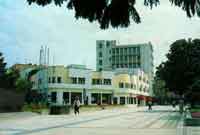 Silistra springs to life in ancient times (1st C.) in the place of a Thracian settlement, existing during the 1st millennium B.C., as a town under the name of Durostorum, one of a chain of fortresses along the Danube bank. In the Middle Ages when the name is changed to Drustur, it is an important military, trade and cultural centre and a bishop's and patriarch's seat (during the years of the First Bulgarian Kingdom). Under Tsar Simeon, i.e. the Second Bulgarian Kingdom, the town is a strong fortress. Between 1913 and 1940 it is on Romanian territory. Still standing are Medzhit Tabiya - a fortress dating back to 1841-1853 with an archaeological exposition, and Sts. Peter and Paul Church (1862).
A historical museum, a theatre. An afforestation park.
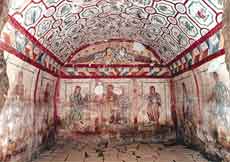 Silistra Tomb - late-antiquity Thracian vaulted sepulchre dating back to the 4th C. The rich mural painting decoration (geometrical, animal and human figures, hunting scenes, a family couple and their maid-servants) is influenced by the tradition of the Hellenistic age and is of exceptional artistic and historical value.
Srebarna natural reserve is close to the town.
 Borovets
 Novachene
 Dolna banya